The Glory Facade will be the most striking face of the Sagrada Familia once it is completed. It will represent humanity’s final destiny: death, the Last Judgment, hell, and eternal glory. This will be the basilica’s main facade, the largest and most monumental of the three, and the last major construction work still pending at Gaudí’s temple.
In this guide, we’ll share all the details about what will become the main facade of the Sagrada Familia: what the final design will look like, its symbolism, curiosities, and estimates of when the basilica will be completed.
Book your skip-the-line guided tour
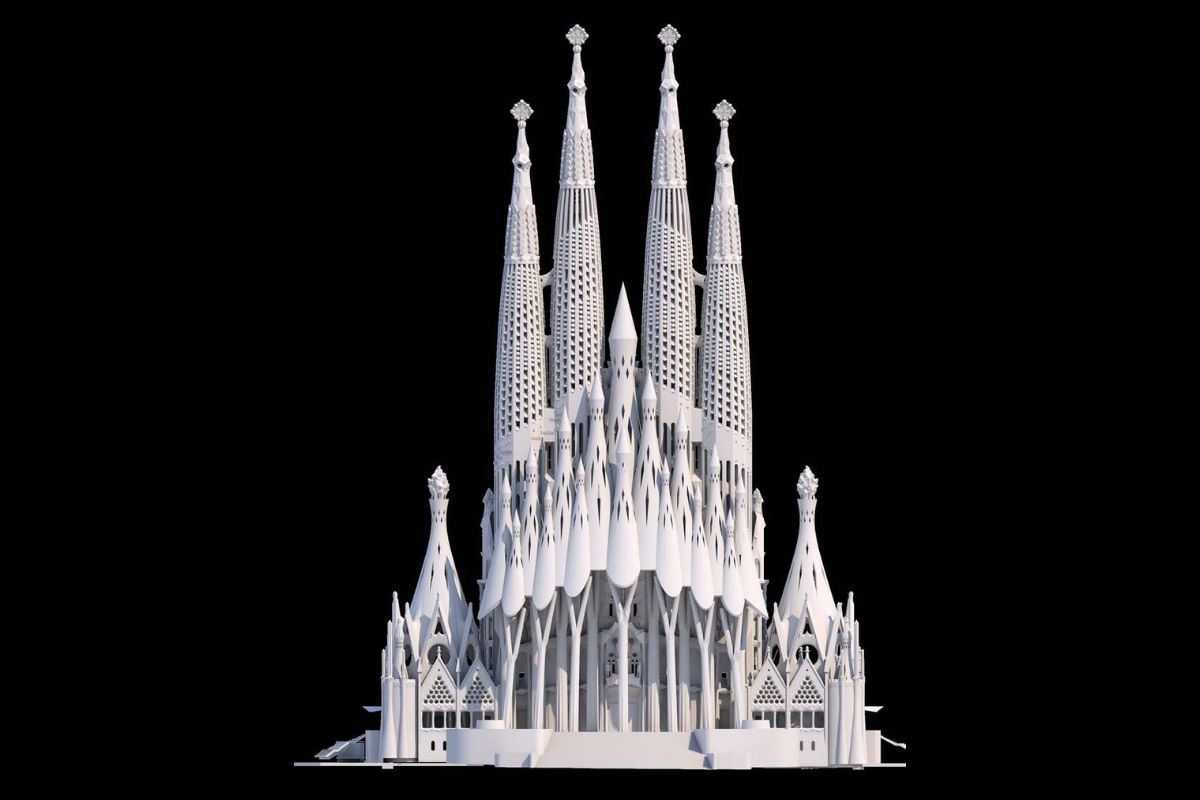
Table of Contents
- The Facades of the Sagrada Familia
- Gaudí’s Project
- Architecture of the Glory Facade
- The Artists of the Glory Facade
- Current Status
- Symbolism
- Project Curiosities
- Plan Your Visit
- When Will It Be Finished?
- The Staircase Controversy
- Where to See the Glory Facade
The Facades of the Sagrada Familia: A Triptych in Architecture
All three facades of the Sagrada Familia together form a unique narrative triptych. The Nativity Facade, which Gaudí himself began, celebrates the beginning of life; the Passion Facade narrates suffering and redemption; and the Glory Facade will represent the final destiny of human existence.
Together, they tell a complete story: we are born, we suffer, we die… and then comes judgment, purification, and eternal glory. Gaudí conceived this message as universal, applicable to believers and non-believers alike, because it speaks to questions we all ask ourselves: where do we come from?, why do we suffer?, what comes after?
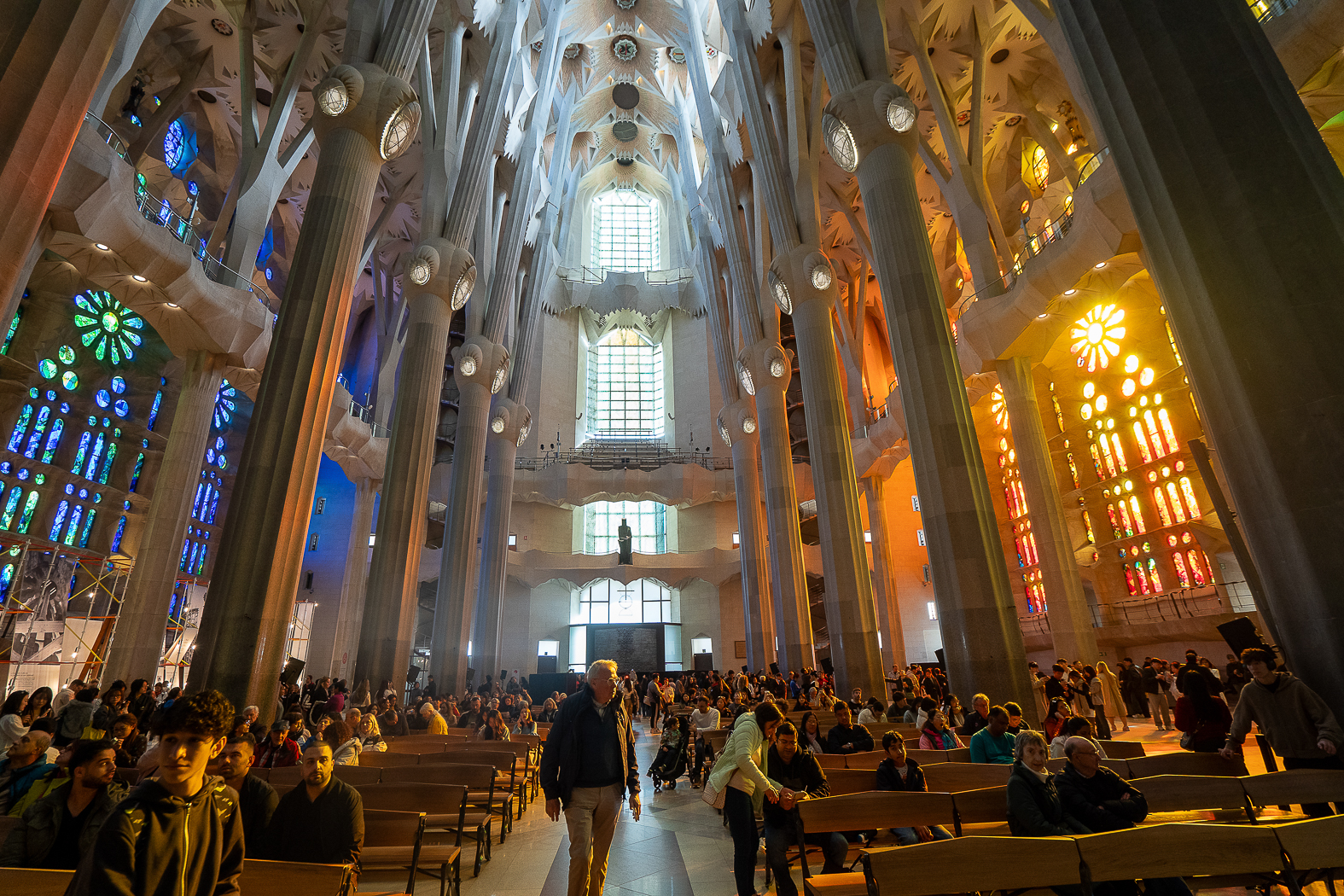
When the Glory Facade is completed, the basilica will have completed its message and we will be able to behold in its entirety the vision Gaudí dreamed of more than a century ago. But there is no need to wait — it is currently possible to explore the Sagrada Familia from the inside, with its two completed facades and spectacular interior, through a guided tour or audio guide that will help you understand every symbol and detail of this masterpiece.
Gaudí’s Project: A Catechism in Stone
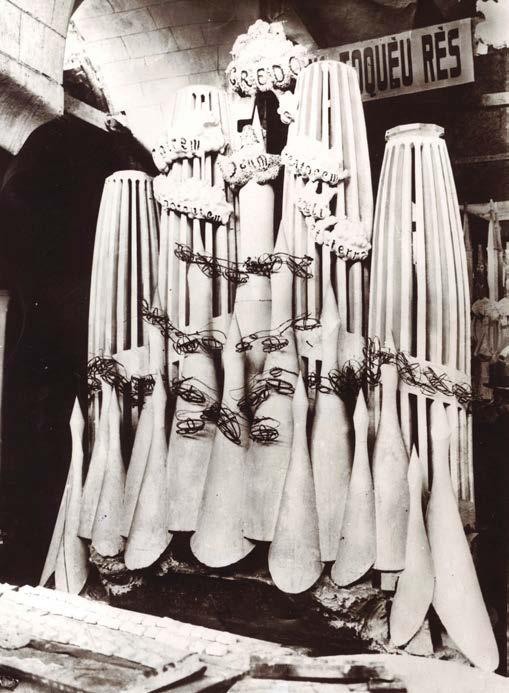
Gaudí conceived the Glory Facade as the temple’s great catechetical portico, a book in stone that the faithful should “read” before entering. Facing south, with access from Carrer de Mallorca, this facade will be the gateway through which millions of visitors will enter the basilica each year.
The Three Doorways: Hell, Purgatory, and Glory
The facade will be divided into three great portals, each representing a stage of the spiritual journey:
Door of Hell (left): Dedicated to sin and the consequences of turning away from God. It will depict the **Seven Deadly Sins** with dramatic figures evoking eternal damnation.
Door of Purgatory (center): The path of purification. Here, souls in the process of redemption will be depicted, along with the Sacraments of the Church and the works of mercy that allow for salvation.
Door of Glory (right): The culmination of the spiritual journey. It will depict the Seven Virtues, the Last Judgment, and the entry into Paradise, with Christ in majesty surrounded by angels and saints.
The Iconographic Program
The symbolism of the Glory Facade is the most complex of the three facades. Gaudí planned to include:
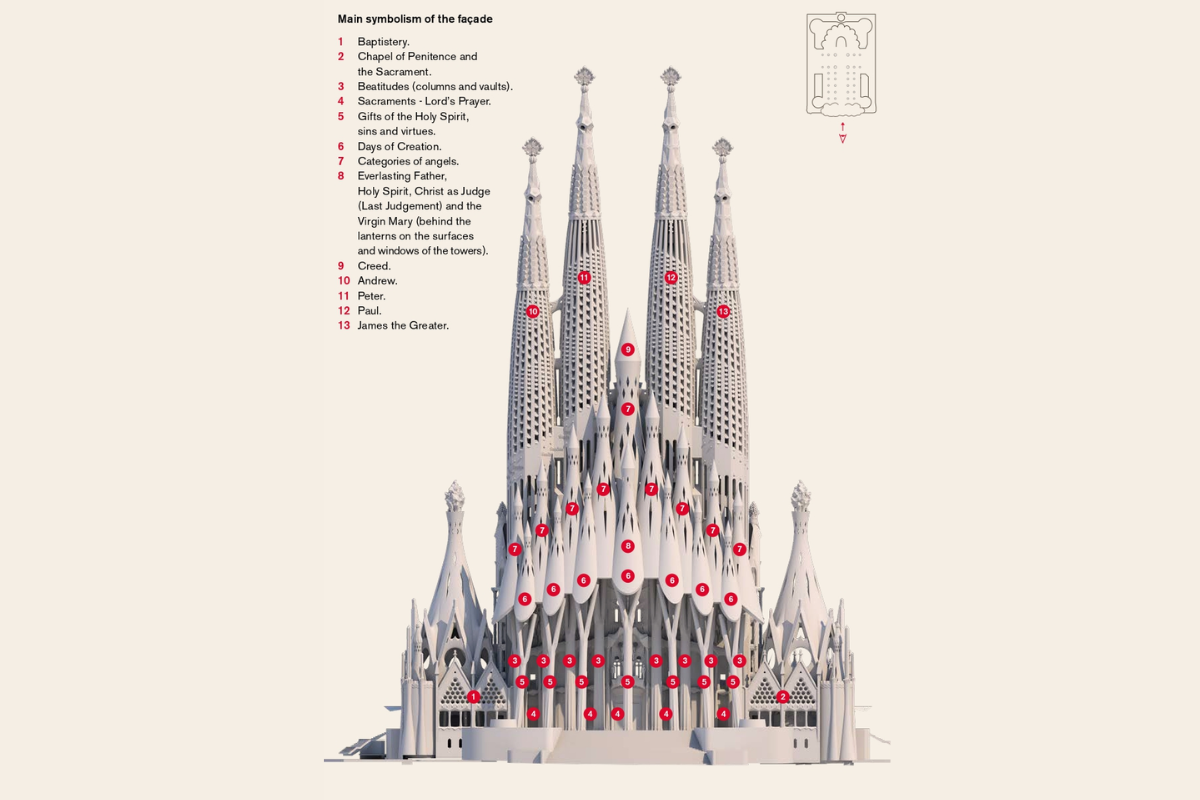
- The Beatitudes (on the eight base columns)
- The Creed (distributed across large illuminated clouds above the portico)
- The Seven Sacraments
- The Works of Mercy
- The Last Judgment
- The Tree of Life as a central symbol
- Adam and Eve (representing the origin of humanity)
This iconographic program would make the facade a visual synthesis of all of Christian theology, far more ambitious than the other two facades.
Architecture: 16 Lanterns and a Forest of Clouds
Architecturally, the Glory Facade will be the most daring. Gaudí designed a set of 16 hyperboloid lanterns of varying heights, one of which (the central one) will rise to a considerable height, creating a transitional effect between the portico and the upper towers.
Above this structure of lanterns, Gaudí envisioned a cluster of large illuminated clouds that would contain the words of the Creed, the prayer that summarizes the dogma of the Christian faith. These clouds, carved in stone but with an ethereal and floating appearance, would create the visual effect of an open sky above visitors’ heads.
The four bell towers of this facade will be the tallest of the three facades: the outer ones will reach 113.20 meters (371 ft) and the central ones 120 meters (394 ft).
For comparison, the Nativity towers measure between 98 and 107 meters (322–351 ft), and the Passion towers between 107 and 112 meters (351–367 ft). Gaudí designed each facade with progressively taller towers to reinforce the sense of verticality and spiritual ascension toward heaven, culminating in the Glory as the gateway to the divine.
These four towers are part of the overall project of the 18 towers of the Sagrada Familia, which include the 12 dedicated to the apostles, 4 to the evangelists, one to the Virgin Mary, and the central tower of Jesus Christ.
The Artists of the Glory Facade
Unlike the other facades, where sculptors have already left their mark, the Glory Facade is still searching for its artists. In 2025, the Board of Works commissioned sketches from three internationally renowned creators to evaluate their proposals:
Miquel Barceló: The Majorcan artist has been the most explicit about his desire to participate in the project. For years he has expressed his interest in contributing a ceramic mural to the facade and has directly contacted those in charge of the basilica to offer his collaboration. His mastery of ceramics and expressive language could bring a contemporary dimension to Gaudí’s project.
Cristina Iglesias: A sculptor of international renown, known for her installations that engage in dialogue with architecture and space. Her work with materials such as bronze, iron, and cement, and her ability to create immersive atmospheres, make her a natural candidate for a project of this magnitude.
Javier Marín: A Mexican sculptor specializing in highly expressive monumental human figures. His mastery of figurative sculpture and his ability to work at large scale are perfectly suited to the needs of a facade that will include more than 100 human figures.
The final decision on who will execute the sculptures has yet to be made, and it is possible that all three artists will collaborate on different sections of the facade, each contributing their own vision to the whole.
Current Status of the Glory Facade
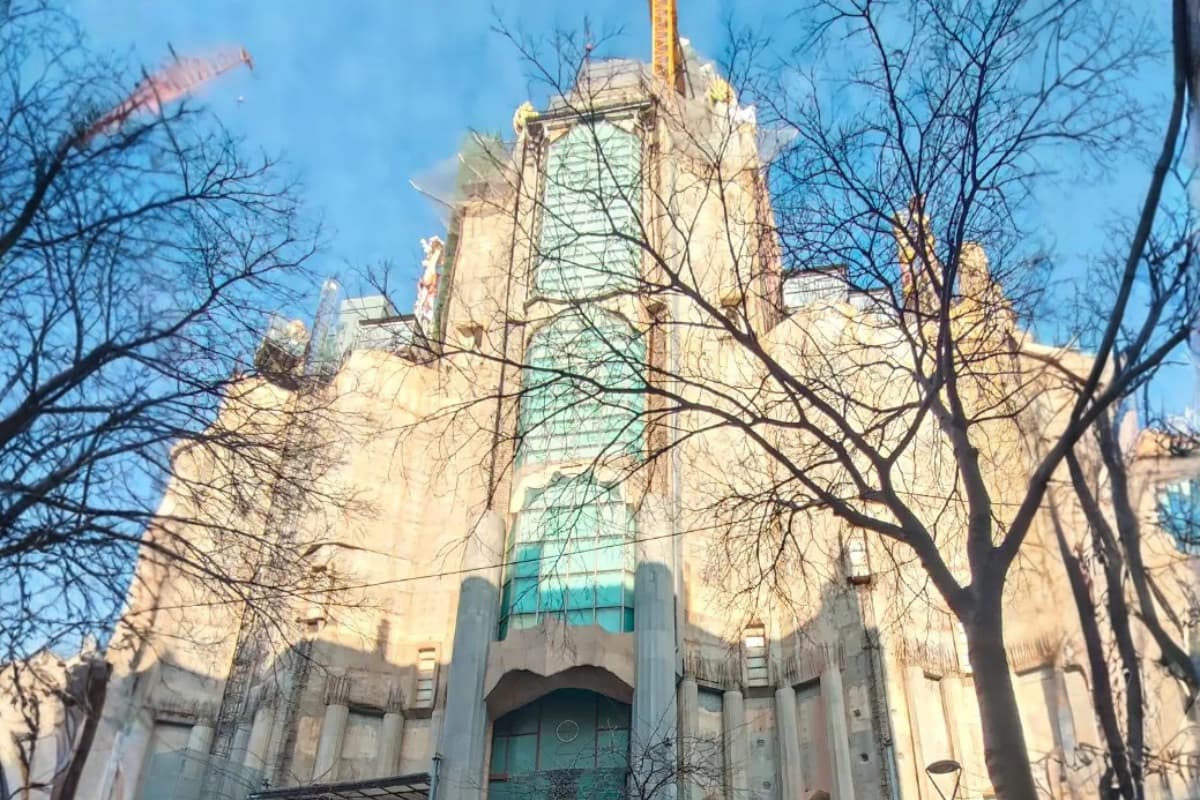
In 2025, vertical construction of the Glory Facade began, marking the start of the temple’s final major structural phase. Work is currently focused on erecting the eight columns that will support the structure and the four bell towers dedicated to the apostles Peter, Paul, Andrew, and James the Greater.
These columns, which are already beginning to rise from street level on Carrer de Mallorca, are dedicated to the Beatitudes and will serve as the foundation for the immense portico that Gaudí envisioned as the temple’s main entrance.
Symbolism of the Glory Facade
As with all facades of the Sagrada Familia, every detail carries multiple layers of meaning.
The Southern Orientation
It is no coincidence that this facade faces south, toward the Mediterranean Sea. Gaudí chose this orientation to represent openness to the world and the universality of the Christian message. While the Nativity Facade faces east (the rising sun, the beginning) and the Passion faces west (the setting sun, death), the Glory faces south: fullness, midday, the moment of greatest light.
The Beatitudes
The eight columns supporting the facade are dedicated to the Beatitudes, Jesus’s teachings on true happiness: blessed are the poor in spirit, those who mourn, the meek, those who hunger for justice, the merciful, the pure of heart, the peacemakers, and those persecuted for the sake of justice.
These columns, in addition to structurally supporting the facade, also bear its theological message symbolically.
The Creed in the Clouds
The illuminated clouds Gaudí projected above the portico will contain the words of the Creed, the Christian profession of faith. This architectural choice is deeply symbolic: the Creed “floats” above the heads of the faithful like a heavenly truth.
Project Curiosities
Although the facade is still under construction, Gaudí’s project holds some fascinating details:
- Gaudí’s alphabet: As with the other facades, the inscriptions on the Glory will use the special alphabet Gaudí created — a blend of Gothic and Modernist letterforms that he considered more legible and beautiful than conventional typefaces.
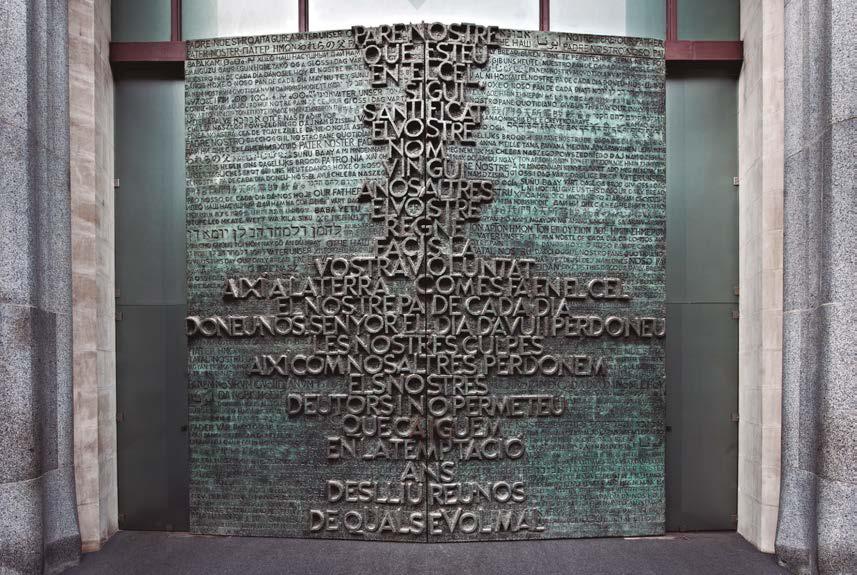
- The Lord’s Prayer in 50 languages: The bronze doors already installed at the facade’s provisional entrance display the Lord’s Prayer in dozens of languages, a symbol of the universality of faith. This detail, though provisional, foreshadows the inclusive spirit Gaudí wished to impart to this main entrance.
- The central tower as axis: The Glory Facade will align perfectly with the Tower of Jesus Christ (172.5 meters), creating a vertical visual axis connecting the temple’s main entrance with its highest point, reinforcing the idea of spiritual ascension.
- More than 100 sculptural figures: When fully completed, the Glory Facade will feature more than 100 human figures, making it the most sculpturally dense of the three facades.
Plan Your Visit
To make the most of your visit to the Sagrada Familia and see all three facades, we recommend getting your tickets in advance. Options include:
- Basic entry ticket: Access to the basilica and views of the facades from inside.
- Entry + towers: Climb one of the towers for panoramic views of Barcelona.
- Entry with guided tour: Detailed explanations from a guide covering every element of the temple, including the Glory Facade project.
- Guided tour + towers: An expert guide explains the symbolism, history, and future of all three facades, with a tower climb included.
Booking ahead not only guarantees your entry, it also lets you choose the best time slot for your visit and avoid the crowds.
When Will the Glory Facade Be Finished?
According to the current schedule of the Board of Works, led by Esteve Camps and architect Jordi Faulí, it is estimated to take approximately ten years to complete, placing its completion around 2036.
However, this timeframe refers only to the architectural structure within the temple’s perimeter. The sculptures, the exterior overhangs, the bridge over Carrer de Mallorca, and a monumental staircase all depend on urban planning agreements yet to be finalized, and could extend the timeline by several more years — a situation that has sparked considerable controversy in Barcelona.
The Staircase Controversy: Urban Planning vs. Heritage
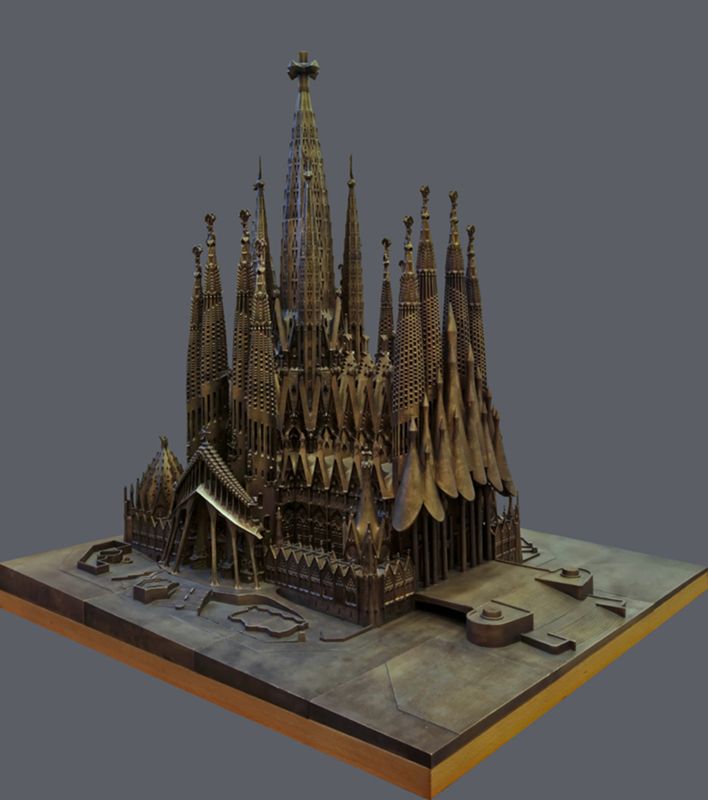
Gaudí’s original design includes a grand staircase that would rise above a bridge built over Carrer de Mallorca, beneath which traffic would flow. This bridge topped with the staircase was, for Gaudí, “non-negotiable” (in the words of the current Board of Works), because it forms an integral part of the temple’s architectural project.
The Current Conflict
The problem is that Barcelona in 2025 is not the city Gaudí imagined in 1916. Where he projected a large open esplanade, residential apartment blocks have stood for decades. Building the staircase as Gaudí designed it would require the expropriation and demolition of several buildings on Carrer de Mallorca, affecting hundreds of residents.
The conflict has been ongoing since 1976, when the General Metropolitan Plan reserved a 71.5-meter strip in front of the future facade to create a grand promenade connecting the temple to Avinguda Diagonal. However, the construction of housing in that strip generated a conflict that successive municipal governments have tried to resolve without success for decades.
Is There a Solution?
The Board of Works has made clear that it “will never give up on the staircase” because it is part of Gaudí’s project, but has also shown openness to dialogue to “adjust its dimensions” if necessary. The Barcelona City Council, for its part, is seeking a solution that respects both architectural heritage and the housing rights of those affected.
For now, construction of the facade is progressing within the temple’s own plot, for which all necessary permits have been obtained. The staircase and bridge are deferred until a definitive agreement is reached.
To put this in perspective: when the Sagrada Familia is finally completed, more than 150 years will have passed since construction began in 1882.
Where to See the Glory Facade
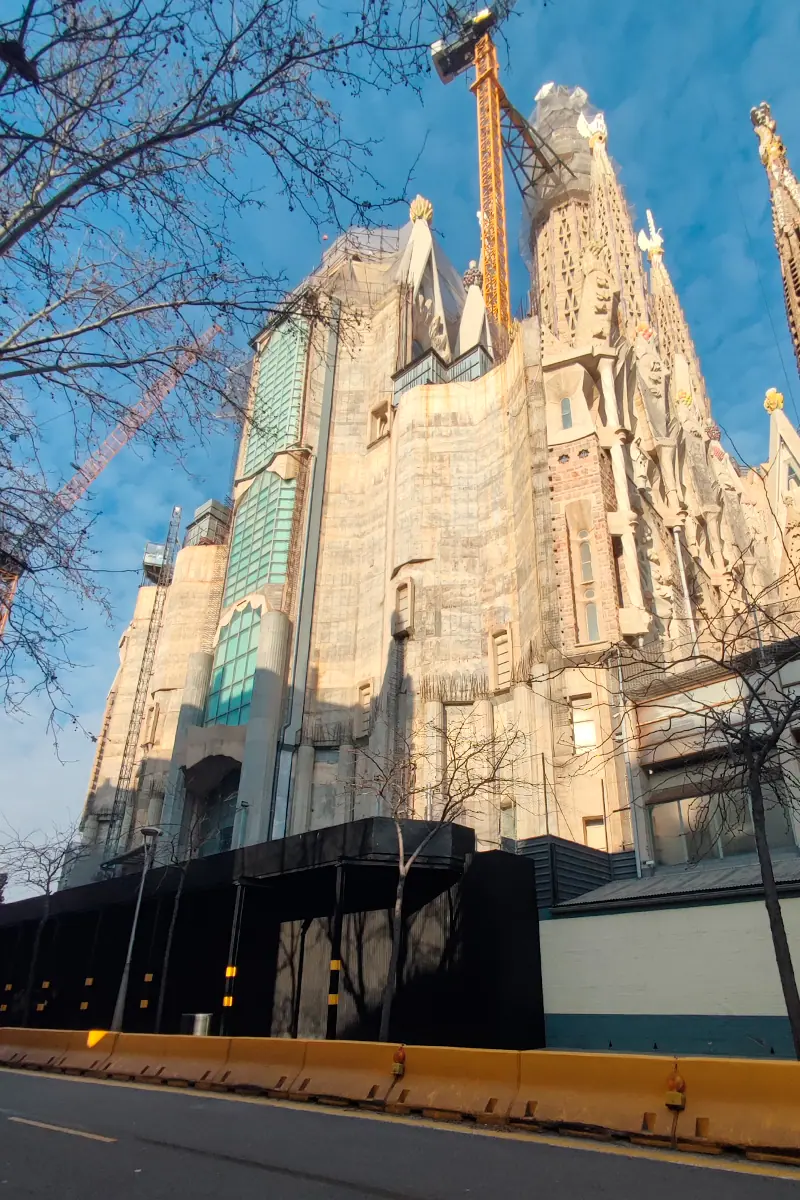
The Glory Facade is located on the south side of the temple, with access from Carrer de Mallorca. You can get your bearings by consulting the Sagrada Familia floor plans.
Currently, what you can see is the space where the facade is being built: the first columns rising, the construction scaffolding, and if you look closely, the provisional bronze doors bearing the Lord’s Prayer in multiple languages.
Unlike the other two facades, there are as yet no sculptures to photograph or details to discover up close. What you see is a construction site that gives you a sense of the magnitude of what is to come.
Are you ready to follow its construction and witness its completion?